Summer is the worst time to find out your bollard was built for the showroom. Heat softens things, storms flood things, and coastal air eats metal. A post that quietly quits in a heatwave or a cloudburst is worse than no post at all, because people have already started trusting it. Here is what keep...
The beach season does not really end in one day. July and August bring the peak, then the shoulder months carry festivals, weekends and mild-weather visitors right through autumn. For a coastal town or resort, that means the control you need in September is not the control you needed in July. Bollar...
Every August the same scene plays out outside schools. Doors open, parents arrive in a tight window, and a calm street turns into a scramble of reversing cars and walking children. Bollards will not fix bad driving, but a well-placed row of posts removes the space where the two worlds collide. That ...
When bollards go into places where people actually walk, school drop-offs, market squares, hospital entrances, the last thing anyone wants is a high-voltage cable buried in the same ground. That is the main reason more installers now spec 36V DC low-voltage automatic bollards. The logic is simple: l...
The part of a bollard project that blows the budget is rarely the post, it is the hole. Traditional installs mean a deep pit, a gravel drainage bed, a sump pump, and a maintenance headache for years. UPARK's electromechanical bollards are built to skip most of that. Here is what changes when drainag...
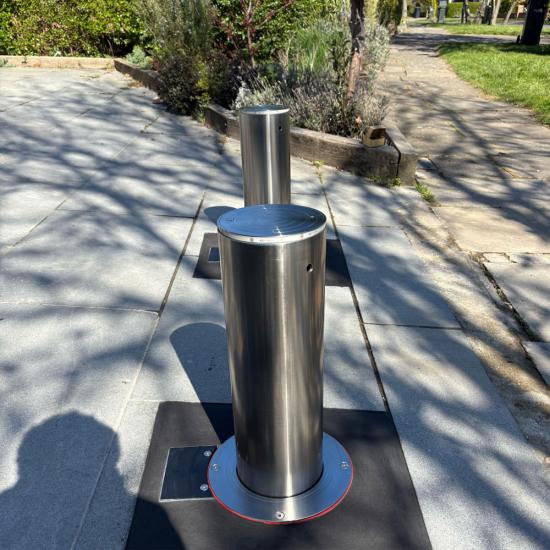
Not every entrance needs the same bollard. Some need a post that never moves. Others need one that drops flat on command. Pick the wrong type and you waste money while annoying the people who use it every day. Here is how the three main types split up. Fixed bollards, set and forget Fixed bollards a...


 ipv6 network supported